
On this page
- The One-Minute Verdict: Which AI Video Model Should You Choose?
- Core Strengths Comparison: What Each Model Does Best
- Cost Analysis: The Real Numbers Marketing Teams Need
- Scene-by-Scene Breakdown: The Multi-Engine Workflow That Wins
- Technical Limitations You Must Know Before Committing
- Strategic Decision Matrix: Your Specific Use Case
- The 2026 Production Reality: Hybrid Workflows Win
- Future-Proofing Your AI Video Strategy
The One-Minute Verdict: Which AI Video Model Should You Choose?
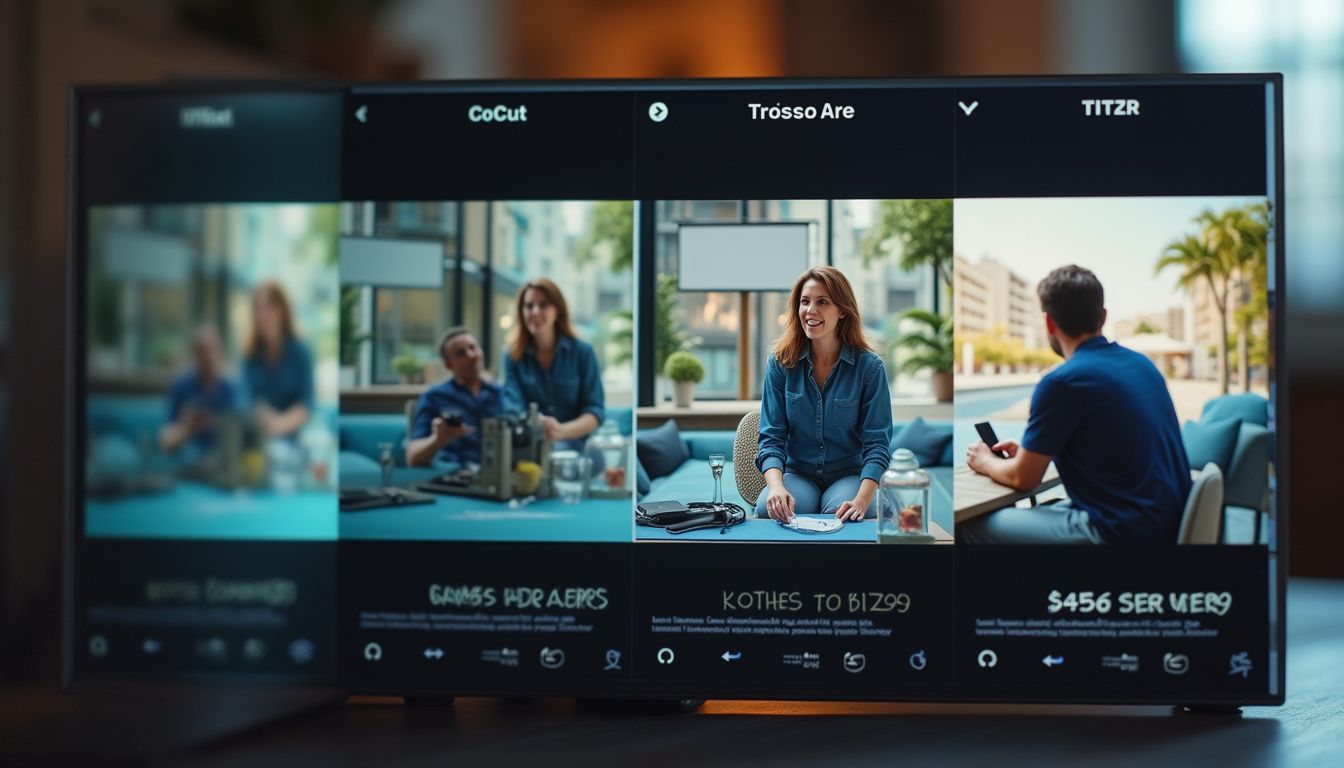
If you're building product ads in 2026, the answer isn't picking one AI video generator—it's knowing which engine excels at which scene type. According to comprehensive testing from UGC Copilot, Sora 2 dominates cinematic actor performance and talking-head content, Veo 3.1 wins on prompt adherence and multi-scene narrative continuity, while Kling 3.0 delivers superior image-to-video motion fidelity. The most cost-effective approach? Use all three strategically within a single 30-second ad.
Marketing teams who understand this multi-engine approach are producing professional UGC-style ads for under $6 that previously cost $250-$1,200 through freelance platforms. The key is matching each model's core strength to specific scenes in your ad structure. For TikTok creators and e-commerce brands testing hundreds of ad variations monthly, this knowledge represents the difference between profitable CAC and burning budget on ineffective creative.
This comparison draws from real production data across thousands of commercial video generations in 2026. We'll break down the precise cost per scene, render times, quality differences, and strategic use cases that determine ROI. Whether you're producing spokesperson content, product b-roll, or narrative explainer videos, you'll leave with a clear decision framework for your specific needs.
Core Strengths Comparison: What Each Model Does Best
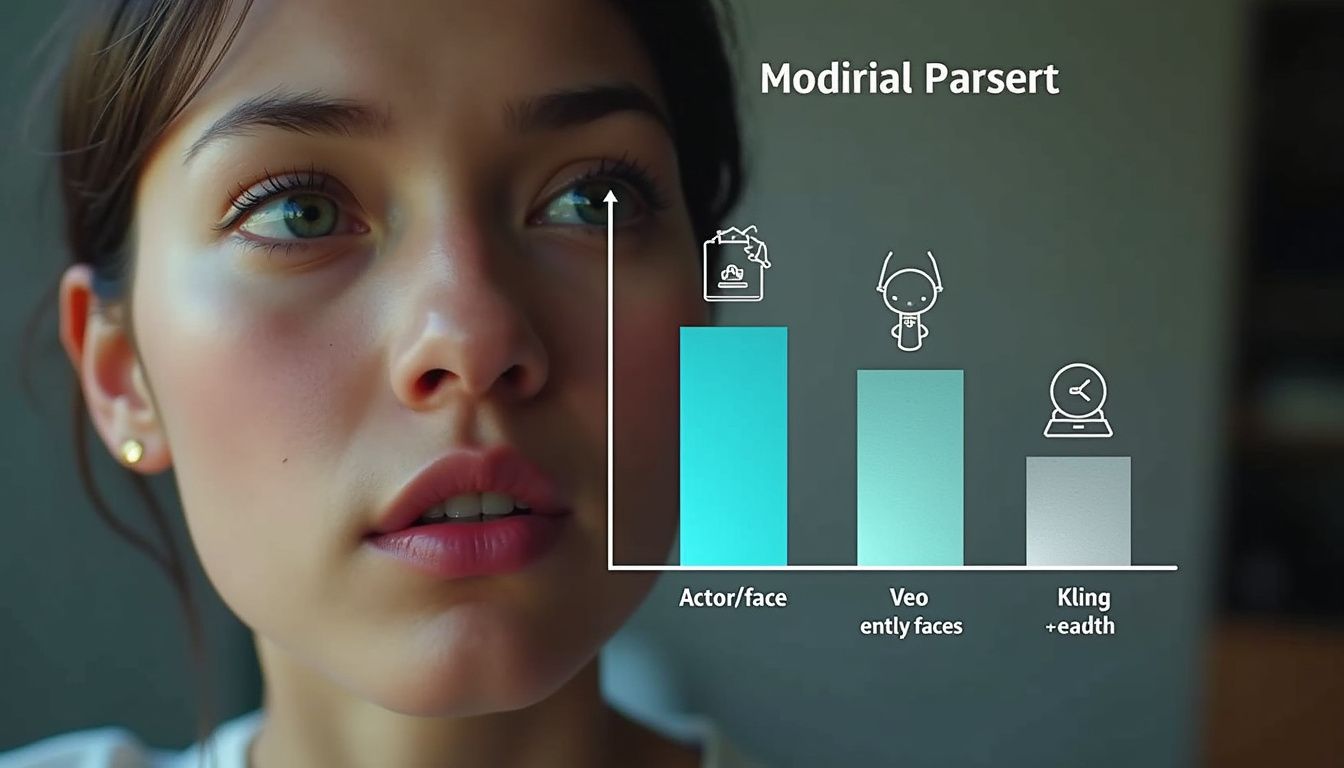
The fundamental difference between these three models comes down to their training focus and architectural advantages. Sora 2's breakthrough capability is actor multi-reference—feed it 3-5 reference images of a human face and it generates that person performing dialogue with convincing micro-expressions, hand gestures, and natural body movement. No competing model in 2026 matches this dimension of human performance. As VO3 AI documents, this makes Sora the default choice for founder testimonials, AI Twin spokesperson ads, and any lifestyle content requiring authentic emotional range.
Veo 3.1's architectural advantage is prompt-adherent spatial reasoning. When your script demands precise product placement—"a hand picks up a blue bottle from the left side of a marble countertop, rotates it 180 degrees, then sets it down to the right of a sprig of rosemary"—Veo executes that choreography more reliably than alternatives. This instructional precision makes it invaluable for product-focused ads with detailed shot lists, explainer videos walking through features, and hospitality or real estate content requiring spatial continuity across scene transitions.
Kling 3.0 specializes in image-to-video conditioning, preserving source composition with higher fidelity than text-only generation. Hand it your existing product photography, brand asset, or hand-drawn keyframe and it produces motion that respects the original visual identity. This capability is critical for DTC brands maintaining consistency across ad variations, Amazon sellers animating listing photos, and any workflow starting from pre-approved creative assets rather than text prompts. According to AiTwo, Kling also uniquely offers 6-shot storyboarding for multi-scene storytelling, making it the only model supporting complete narrative structure within a single generation.
Cost Analysis: The Real Numbers Marketing Teams Need
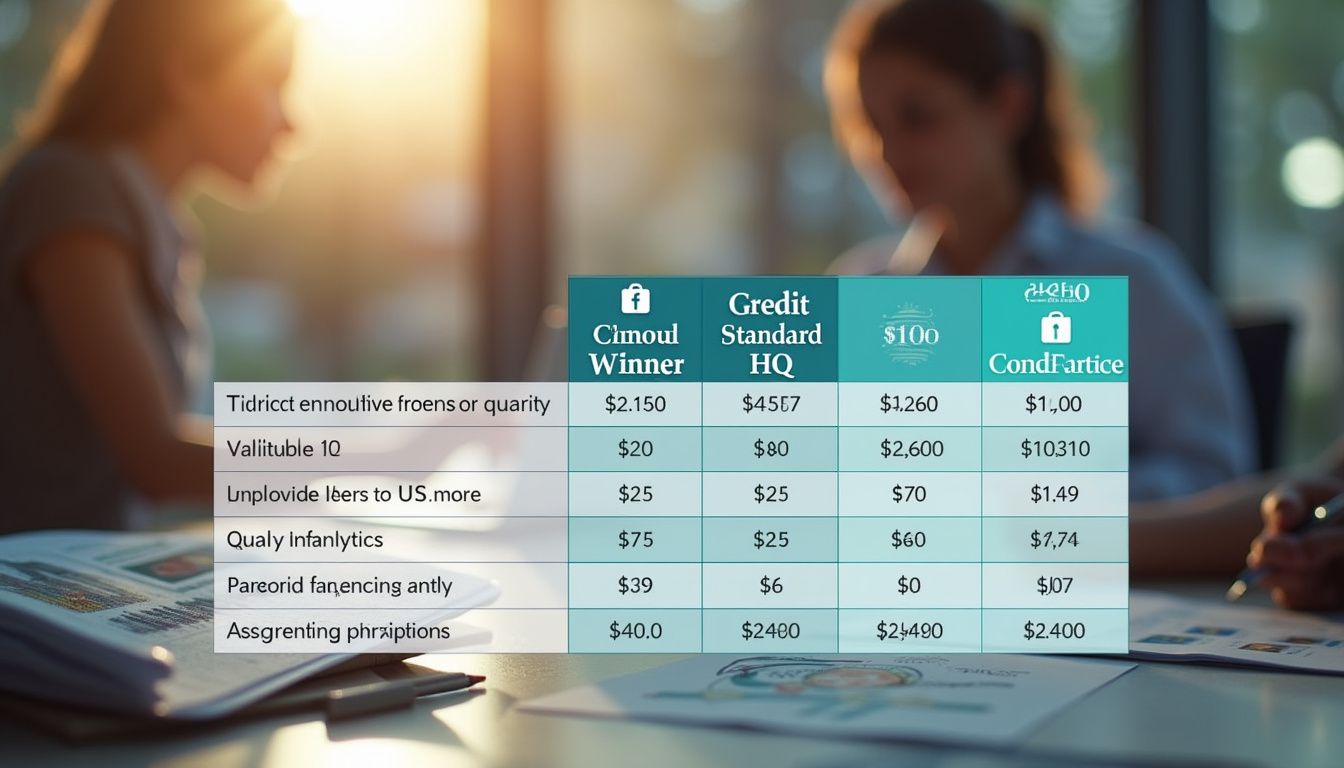
Cost structure fundamentally shapes production strategy. Based on actual credit charges from production systems, Sora 2 costs 18 credits for 8 seconds at standard quality (approximately $1.04 at Creator plan rates of $0.058 per credit). Veo 3.1 charges a flat 40 credits regardless of clip length, meaning a 4-second cutaway costs the same as an 8-second scene—roughly $2.32 per generation. Kling 3.0's native segment length is 6.4 seconds at 32 credits standard quality, translating to about $1.86 per natural-length clip.
These unit economics create counterintuitive strategic implications. For a complete 30-second ad comprising four scenes, Sora 2 delivers the lowest total cost at approximately 72 credits ($4.18), Kling comes in at roughly 128 credits ($7.42 using natural 6.4-second segments), while Veo's fixed-cost structure pushes a four-scene project to 160 credits ($9.28). However, Veo's 2-5 minute render time versus Sora's 10-15 minutes means Veo enables rapid hook iteration during creative testing phases, potentially saving far more than the per-scene premium through faster learning cycles.
The cost equation shifts dramatically at high-quality tiers. Sora 2 HQ jumps to 65 credits per 8 seconds, Veo 3.1 HQ costs 130 credits flat, and Kling 3.0 HQ runs 50 credits per 6.4 seconds. For hero brand films where quality ceiling matters more than budget, Sora's HQ tier produces the most cinematic output. But for volume A/B testing of ad variations—the actual workflow for performance marketers—standard quality on the appropriate model delivers better ROI than maxing out HQ settings universally.
One critical detail often missed: Rewarx notes that Kling 3.0's May 2026 update added a native 4K tier at 130 credits, making it the only image-to-video option producing true 4K output. For campaigns requiring high-resolution product shots repurposed across multiple channels, this positions Kling uniquely despite the premium pricing at that tier.
Scene-by-Scene Breakdown: The Multi-Engine Workflow That Wins
Professional production in 2026 doesn't mean choosing one model—it means architecting which engine handles which scene type within your ad structure. The typical winning pattern for a 30-second UGC-style product ad follows this framework: Open with Sora 2 for a 5-second talking-head hook calling out the pain point, leveraging native lipsync to establish authentic spokesperson credibility. Transition to Kling 3.0 for a 6.4-second animated product reveal starting from your brand-approved hero photograph, maintaining visual consistency while keeping costs contained.
The third scene demonstrates product use through Veo 3.1's 8-second precisely choreographed action sequence. This is where Veo's prompt adherence delivers the exact frame your script demands—the moment a hand opens the package, the product rotates to show the label, the feature activation that drives conversion. Finally, close with another Sora 2 segment for a 5-8 second talking-head CTA, creating continuity with the opening hook while reinforcing the spokesperson persona established at the start.
This four-scene structure totals approximately 101 credits at standard quality—roughly $5.86 on standard pricing tiers. Compare this against the $250-$1,200 range for outsourcing the same brief to freelance video editors, and the efficiency transformation becomes clear. The framework scales to different ad lengths and formats: TikTok-style rapid cuts might use Kling's fast 6.4-second native length across all segments for maximum speed and minimum cost, while prestige brand films lean into Sora HQ for every scene despite higher per-clip expenses.
The strategic principle underlying this approach is matching model capabilities to specific requirements rather than forcing one tool to handle all scenarios. Sora excels when human performance matters—spokesperson content, testimonials, lifestyle shots of people using products. Veo dominates instructional precision—product demos, explainer sequences, any scene requiring exact spatial choreography. Kling wins when brand consistency from existing assets matters more than generative creativity—animating product photography, maintaining visual identity across variations, adding motion to pre-approved illustrations.
Technical Limitations You Must Know Before Committing

Every model carries constraints that determine suitability for specific projects. Sora 2's primary weakness is render speed—10-15 minutes per standard quality scene, extending to 15-25 minutes for HQ output. This makes Sora poorly suited for rapid hook iteration during creative testing phases when you need to generate and evaluate 20 variations in an afternoon. According to Picasso IA, Sora also struggles with strict product placement compared to Veo; if your brief requires a specific bottle on a specific shelf at a specific angle, Veo's spatial reasoning produces more predictable results.
Kling 3.0's critical limitation is weak text-only generation and absent native audio. For talking-head spokesperson content, Kling cannot compete with Sora's lipsync and dialogue performance. Kling also lacks native audio generation entirely—you'll add voiceover and music in post-production using separate tools like ElevenLabs. This additional workflow step makes Kling inefficient for dialogue-heavy content but irrelevant for silent product b-roll where you're overlaying separate audio tracks anyway. The platform went through endpoint nomenclature changes in 2026 (V3 to O3 to V3 again), with the May 23 update restoring the negative_prompt parameter and adding the 4K tier mentioned earlier.
Veo 3.1's weakness is economic rather than technical: the fixed 40-credit cost regardless of clip duration makes it expensive for short cutaway shots. A 3-second b-roll insert still bills the full 40 credits, identical to an 8-second scene. This cost structure means Veo should never be your choice for tiny transition clips or rapid montage sequences—use Kling or Sora for those. Veo's actor performance, while competent, also falls noticeably short of Sora's quality in dialogue-heavy spokesperson scenarios. For purely visual product demos without human performance, this limitation doesn't matter. For founder testimonials or AI Twin content, it's disqualifying.
Understanding these constraints prevents expensive mistakes. The most common production error is forcing one model to handle scenarios outside its capability zone—using Kling for talking-head content because you're already comfortable with the interface, or insisting on Sora for all scenes despite its render time destroying your iteration velocity. The winning approach requires tactical flexibility: different models for different scene types within the same project.
Strategic Decision Matrix: Your Specific Use Case

Making the right model choice starts with identifying your primary content type and production constraints. For TikTok and Instagram Reels focused on rapid trend response, Kling 3.0 delivers the optimal combination of speed, cost, and quality for short-form content. Its 3-8 minute render time at standard quality and half-the-cost economics compared to competitors enable the volume testing required for algorithm-driven platforms. When you're producing 50 hook variations weekly to find the 2-3 that achieve viral distribution, Kling's throughput advantage compounds dramatically.
E-commerce product ads and Amazon listing videos point toward Veo 3.1 for a different reason: cinematic look combined with fast turnaround. The 2-5 minute render time means you can generate, review, and iterate on product showcase content within the same working session. Veo's 4K output capability (at the HQ tier) also future-proofs assets for multi-platform distribution. However, if your e-commerce workflow starts from existing product photography rather than text prompts—the typical case for established DTC brands with professional product shoots—Kling's image-to-video conditioning preserves those source assets with higher fidelity than Veo's image conditioning mode.
Documentary and cinematic brand films require Sora 2's superior photorealism and physics simulation despite the render time penalty. When the goal is a 60-90 second hero piece for homepage placement or investor presentations, the 10-15 minute wait per scene is acceptable in exchange for the highest quality ceiling available in 2026. Sora's understanding of lighting, depth of field, and realistic motion produces output that withstands scrutiny on large displays and high-resolution contexts where AI artifacts become visible with lesser models.
Budget-constrained projects with high volume requirements default to Kling 3.0's cost advantage. At roughly half the per-scene cost of Sora and Veo, Kling enables production scale that would be economically prohibitive with premium models. This makes Kling the strategic choice for agencies managing multiple client accounts, performance marketing teams running continuous A/B testing programs, and content creators producing daily TikTok uploads where quantity drives algorithmic distribution as much as individual video quality.
The 2026 Production Reality: Hybrid Workflows Win
The actual production workflow that dominates performance marketing in 2026 isn't model loyalty—it's strategic model mixing within individual projects. Top-performing agencies generate the spokesperson hook in Sora 2 for authentic human performance, transition to Kling 3.0 for cost-efficient product b-roll maintaining brand consistency from existing photography, use Veo 3.1 for the precise product demonstration sequence requiring exact choreography, then return to Sora for the closing CTA to reinforce spokesperson continuity from the opening.
This hybrid approach extracts each model's core strength while avoiding its weaknesses. You're not paying Sora's premium for every scene—only for the talking-head segments where its actor performance advantage justifies the cost. You're not wasting Veo's fast iteration speed on simple b-roll—only on the complex multi-step product demos where prompt adherence determines conversion. You're not forcing Kling to generate dialogue it can't render naturally—only animating the static product shots where its image-to-video capability outperforms alternatives.
The workflow requires comfort with multiple platforms and the discipline to switch contexts based on scene requirements rather than interface familiarity. Most creators gravitate toward one preferred model and overuse it for convenience, leaving performance on the table. The winners in 2026 treat these tools as specialized instruments in a complete production toolkit, selecting the right one for each specific job rather than defaulting to a single all-purpose solution.
Platform integration matters here. Tools like UGC Copilot that orchestrate multi-engine workflows within a unified interface reduce the friction of this approach, making it practical to mix models without manually managing separate accounts, credit pools, and export processes. As the AI video space matures, this orchestration layer becomes as important as the underlying models themselves.
Future-Proofing Your AI Video Strategy

Model capabilities evolve rapidly—Kling alone went through two major endpoint updates in 2026, adding 4K support and restoring the negative prompt parameter. Strategic decision-making requires understanding trajectory as much as current state. Sora's development roadmap suggests upcoming improvements to product placement accuracy and reduced render times, potentially closing the gaps where Veo currently dominates. Veo's fixed-cost structure creates economic pressure to extend maximum clip length, which would fundamentally shift its competitive position if Google moves beyond the current duration limits.
Kling's image-to-video advantage is defensible precisely because it addresses a different starting point than text-to-video models. As long as brands maintain libraries of approved product photography and illustration assets, the ability to animate those existing materials remains valuable regardless of improvements in text-only generation. This suggests Kling's niche is more durable than temporary gaps competitors might close through better prompt engineering or model training.
The broader industry trend points toward specialization rather than convergence. Rather than one model becoming dominant across all use cases, we're seeing models optimize for specific content types—Sora for human performance, Veo for spatial precision, Kling for asset animation. This specialization trajectory reinforces the multi-engine approach: as models become more narrowly excellent at their core competency, the value of strategic mixing increases rather than decreases.
For marketing teams building repeatable production systems in 2026, the implication is clear: infrastructure should support model flexibility rather than lock into a single vendor. Credit pools, workflow templates, and team training that assume one model for all scenarios create technical debt that becomes expensive to unwind when the next capability shift arrives. The winning strategy is building production frameworks that can swap models tactically while maintaining creative consistency and operational efficiency across the overall output.