
On this page
The Short Answer: Entertainment, Not Prediction
Are AI baby generators accurate? The honest answer is no—not in the way most people expect. These tools are designed for entertainment, not genetic prediction. They produce plausible, often adorable blends of two faces by analyzing visible features in photographs, but they cannot predict what your actual future child will look like with any scientific reliability.
According to research from Stork.AI, many tool websites quote figures like "40–60% accuracy," but there are no published studies measuring how well consumer baby generators match real offspring. These numbers are marketing claims, recycled from site to site without scientific backing. The reality is that AI baby generators work from pixels, not DNA, making them fundamentally different from genuine genetic prediction.
That doesn't mean these tools are worthless. A good generator produces a baby that believably belongs to your family—the right skin tone range, plausible eye shape, and a recognizable mix of features. Think of it as a creative portrait artist working from two reference photos rather than a geneticist analyzing your chromosomes. The result can be fun, shareable, and emotionally engaging, but it's a simulation, not a forecast.
Understanding this distinction upfront helps set realistic expectations. AI baby generators excel at creating something that feels right rather than something that will be right. Once you stop expecting prophecy and start appreciating them as sophisticated image synthesis tools, they become exactly what they actually are: one of the most entertaining things you can do with two photos and thirty seconds.
How Do AI Baby Generators Work? The Technical Reality
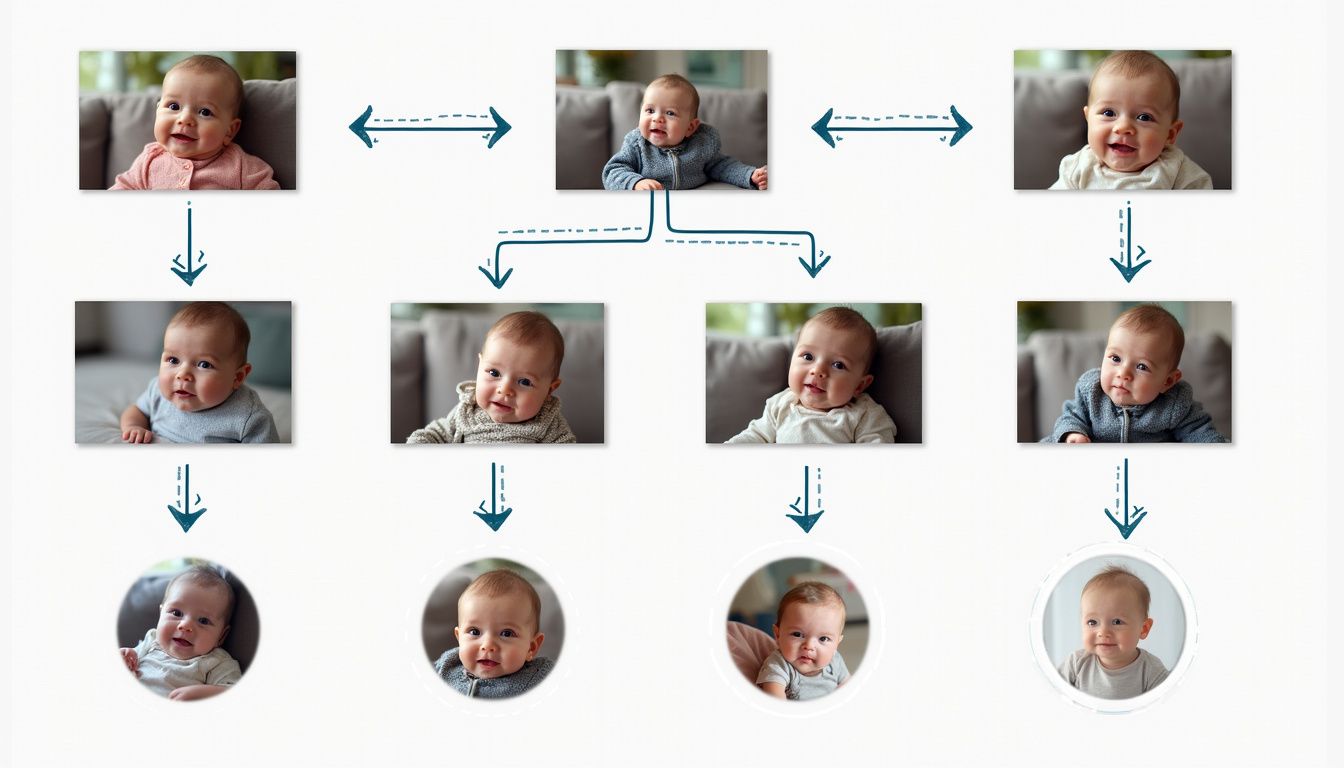
Understanding how do AI baby generators work reveals exactly why they can't be truly accurate. As explained by Nerdbot, these systems follow a five-step pipeline: face detection and alignment, feature extraction, feature blending, image synthesis, and conditioning/refinement. Every mainstream tool follows some version of this process, which takes just seconds to complete.
The process begins with face detection, where the system locates each face in the uploaded photos, rotates and crops to a standard frame, and normalizes lighting. Next comes feature extraction, where a neural network reads facial landmarks and encodes each face into an embedding—a vector of numbers capturing eye shape, nose structure, jawline, and skin tone. According to Imgveo AI, these embeddings describe hundreds of visual parameters, from eye spacing to face width.
The critical step is feature blending, where the two parent embeddings are combined in a latent space to produce a target representation for the child's face. This blend is weighted, not democratic—the model might lean 70/30 toward one parent's eye shape while taking the other parent's mouth. Finally, a generative model paints a brand-new photorealistic face from this blended description, conditioned on your chosen age and gender.
This technical reality exposes the accuracy limitation: the AI works exclusively from visible features in photographs. It cannot see recessive genes, access your DNA, or know which traits are hidden in your genetic code. Two brown-eyed parents can have a blue-eyed child if both carry a recessive variant, but a photo carries zero information about what you carry—only what you show. The generator is essentially a competent portrait artist, not a geneticist.
The Science Gap: Why Pixels Can't Replace DNA
The gap between AI baby generators and real genetic inheritance is enormous and measurable. A landmark 2021 study published in Nature Genetics linked facial structure to 203 distinct regions of the genome, and the authors consider that a partial map. Even eye color, the classic "simple" trait from biology class, involves more than 60 genes according to research in Science Advances 2021. Faces are massively polygenic—meaning countless genes interact to produce the final result.
Real genetic inheritance operates through random recombination of chromosomes, creating genuine biological lottery outcomes. As Baby Generator AI notes, this probabilistic process can produce children who resemble neither parent, especially when recessive traits resurface after generations. No amount of pixel math substitutes for this complex biological machinery.
The table below, adapted from research cited by Stork.AI, illustrates the fundamental differences:
| Aspect | AI Baby Generator | Real Genetics |
|---|---|---|
| Input | 2 photos (surface features only) | Two full genomes |
| Mechanism | Weighted feature averaging | Random recombination of chromosomes |
| Hidden traits | Invisible—can't use them | Recessive genes can resurface |
| Complexity | Hundreds of visual parameters | 203+ genomic regions for facial structure alone |
| Variability | New random blend each run | Genuine biological lottery |
| Output | Always plausible blend | Anything within combined gene pool |
There's another crucial factor that undermines accuracy: real newborns change dramatically in their first year. The American Academy of Pediatrics documents that head shape, hair color and amount, and even apparent eye color routinely shift after birth. Even a hypothetically perfect DNA-based prediction of a newborn would look wrong within months, making "accuracy" a moving target that even genetics couldn't perfectly hit.
Why You Get Different Results Every Time
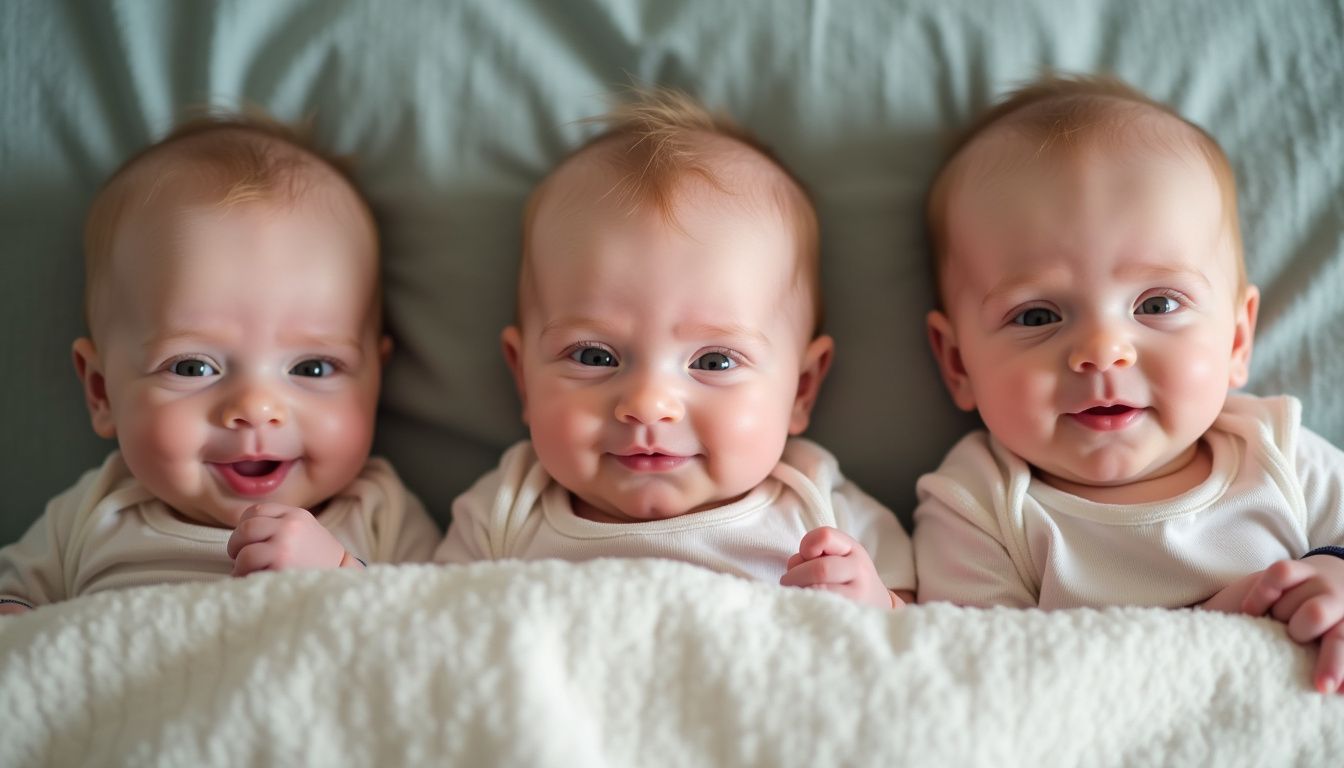
One of the most confusing aspects of AI baby generators is that running the same two photos twice produces different babies. This isn't a bug—it's by design. As explained by Imgveo AI, generative models sample from randomness (a "seed") on every run, so each generation is a fresh draw from the space of plausible blends.
The blend percentage varies between runs. One generation might weight the first parent's features at 60% and the second at 40%, while the next run reverses those proportions. The model might emphasize different facial aspects each time—taking one parent's eye shape in the first generation and the other parent's eye color in the second. This variability mimics the actual unpredictability of genetic inheritance, though through completely different mechanisms.
Rather than seeing this as inconsistency, smart users treat it as a feature. Stork.AI recommends generating 3–5 versions and treating them like a set of possible siblings. Compare runs to spot stable features—if every version inherits one parent's eye shape, the blend is weighting it heavily. Try both boy and girl versions to see how gender conditioning affects the outcome.
This randomness actually increases realism in an unexpected way. Real siblings from the same parents can look remarkably different from each other due to genetic recombination. The AI's variability creates a similar effect, though through statistical sampling rather than chromosomal shuffling. One generation is essentially a coin flip, but a handful of generations becomes a family portrait session showing the range of possibilities within your blended features.
What AI Baby Generators Actually Get Right
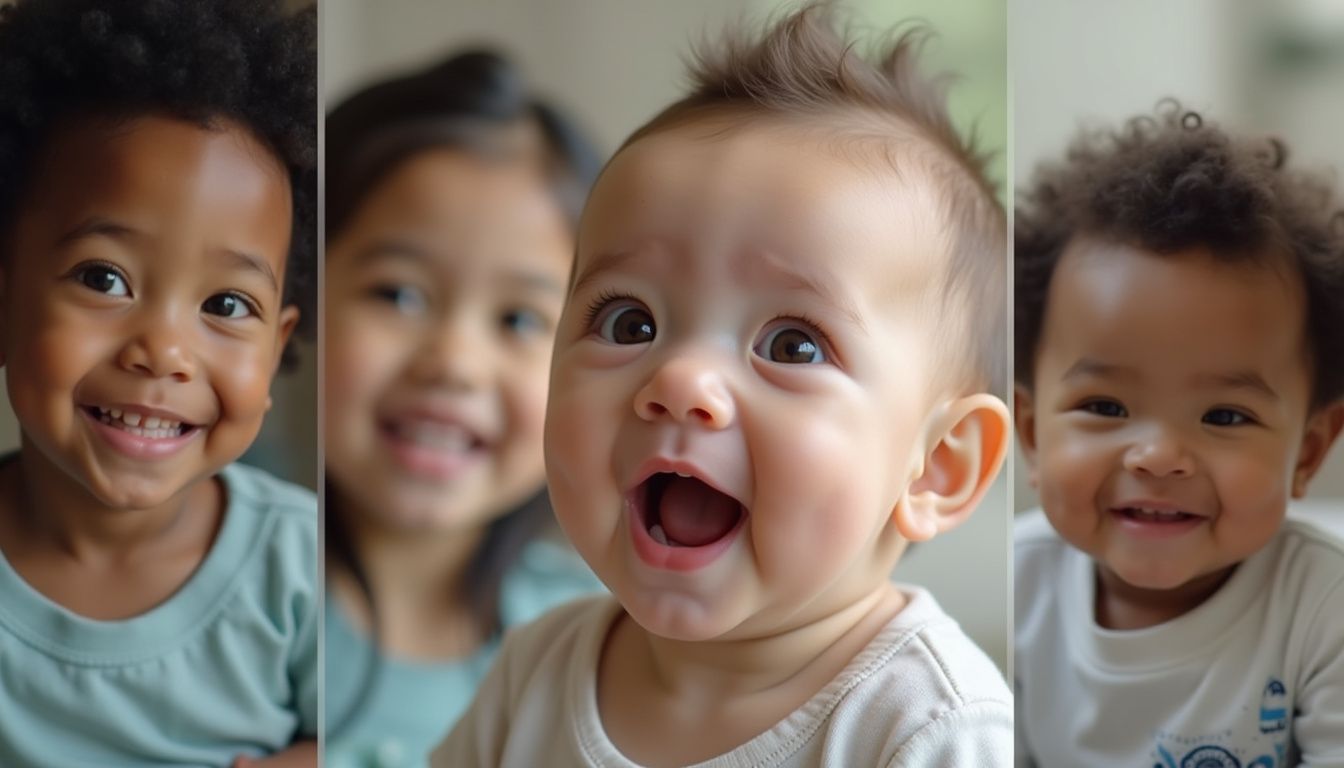
Despite their limitations, modern AI baby generators do reliably land certain aspects of family resemblance. According to Baby Generator AI, the three main successes are skin tone range, broad facial architecture, and the "family resemblance" feeling that makes viewers recognize whose child the image represents.
Skin tone blending produces results consistent with what a real child of the couple would plausibly have. The visible tones in the parent photos get mathematically averaged in the embedding space, creating a realistic intermediate shade. While this doesn't account for complex melanin genetics, it works surprisingly well for producing believable results that pass the "could be their kid" test.
Broad facial architecture—face width, eye spacing, and general proportions—carries effectively from the inputs because these are exactly the features that facial embeddings encode best. As detailed by Nerdbot, the model extracts geometric relationships between landmarks like eye corners, nose bridge, and jawline, and these structural features blend predictably.
The "family resemblance" quality is perhaps the most impressive achievement. Friends looking at a good result can usually tell whose child it's supposed to be, which is a real, testable property even if it isn't genetic prediction. The system succeeds at creating something that emotionally registers as "their baby" by capturing the gestalt of parental features rather than modeling actual inheritance patterns.
The Bottom Line: Setting Realistic Expectations

Are AI baby generators accurate? No—but they were never designed to be. These tools are sophisticated image synthesis systems that create plausible visual blends of two faces, not genetic prediction engines. As MagicShot AI explains, they produce entertainment outputs, not medical or scientific forecasts.
The honest ceiling for expectation is this: a good tool produces a baby that believably belongs to your family—the right skin tone range, plausible eye shape, a mix of recognizable features. That's substantially different from predicting your actual future child's appearance, which even DNA analysis couldn't do with perfect accuracy given how dramatically newborns change and how complex facial genetics really are.
Understanding how do AI baby generators work—the five-step pipeline from face detection through feature extraction, blending, and synthesis—reveals both the impressive technology and the inherent limits. These systems work from pixels, not chromosomes, making them fundamentally incapable of accounting for recessive genes, hidden traits, or the probabilistic nature of real genetic inheritance.
The best approach is to use these tools for what they excel at: creating fun, shareable images that spark conversation and imagination. Generate multiple versions, compare the results, enjoy the variations. Just remember that you're looking at creative AI artwork inspired by your faces, not a preview of your actual future. Once you stop expecting prophecy, these tools become exactly what they actually are—and that's entertaining enough.