On this page
If your TikTok ad doesn't hook the viewer in the first three seconds, it doesn't matter how good the rest of it is. The platform's algorithm measures retention aggressively — videos that lose attention early get buried, while those that hold it get pushed. For app creators, SaaS founders, and DTC brands testing ads at scale, the hook is the single highest-leverage element in the creative.
This guide breaks down the hook formulas that work in 2026, split by what B2B and B2C audiences respond to. All examples are grounded in current research from Metadata Reactor, InstantPress, and ShareB.io, so you can steal what works and skip what doesn't.
Why the First 3 Seconds Decide Everything
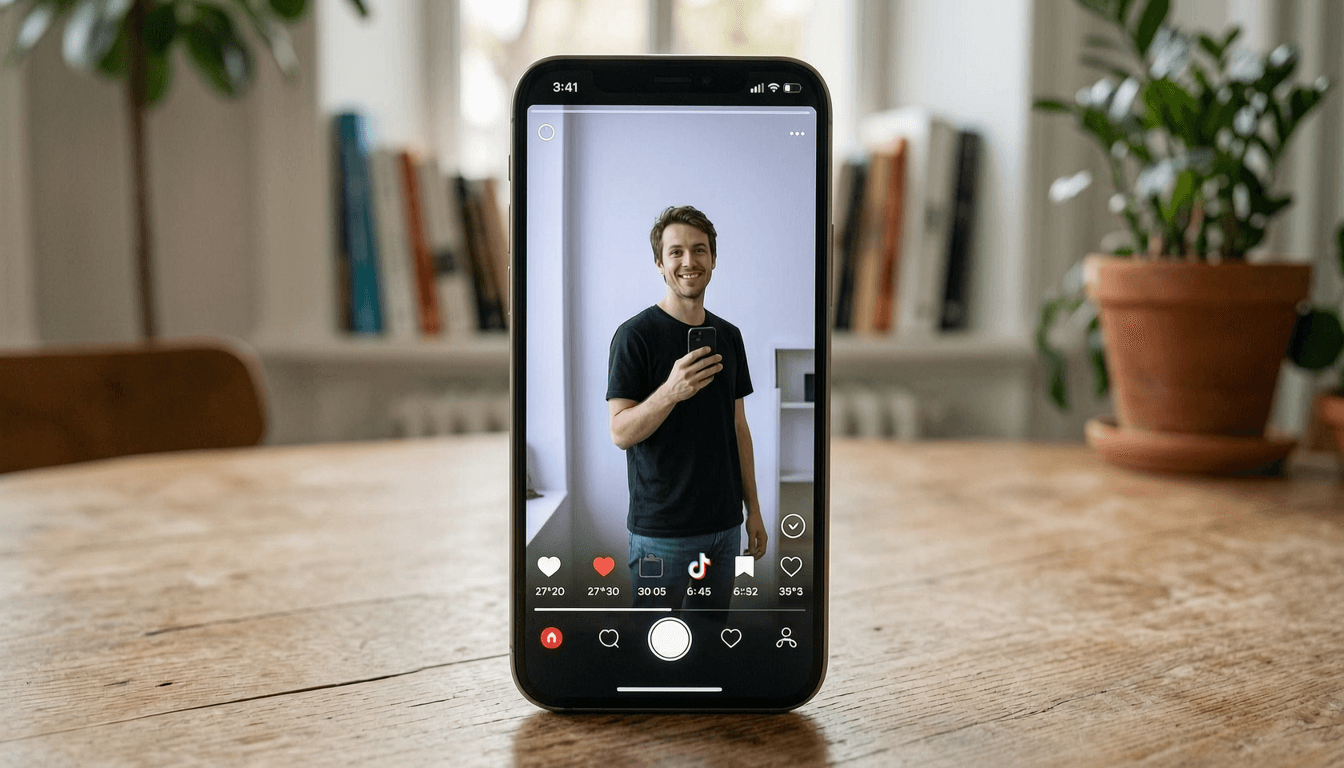
TikTok's feed is a competition for attention, not a passive browsing experience. The average user scrolls past a video in under two seconds if nothing catches them. The platform tracks this ruthlessly: if your completion rate is weak in the first three seconds, the algorithm assumes the content is low-value and stops showing it.
For paid ads, this is even more brutal. You're competing with organic content that users chose to follow. Your hook has to out-perform entertainment, not just other ads. According to Go-Viral.app, the strongest hooks combine a pattern interrupt (visual or verbal), a curiosity gap, and a specific payoff. The viewer needs to know immediately why stopping is worth their time.
The tactical breakdown: your hook has three jobs in three seconds. First, interrupt the scroll with something visually or conceptually unexpected. Second, create a gap between what the viewer knows and what they want to know. Third, signal the payoff clearly enough that they commit to watching. Miss any of those three, and retention falls off a cliff.
The Core Hook Formula That Works for Apps
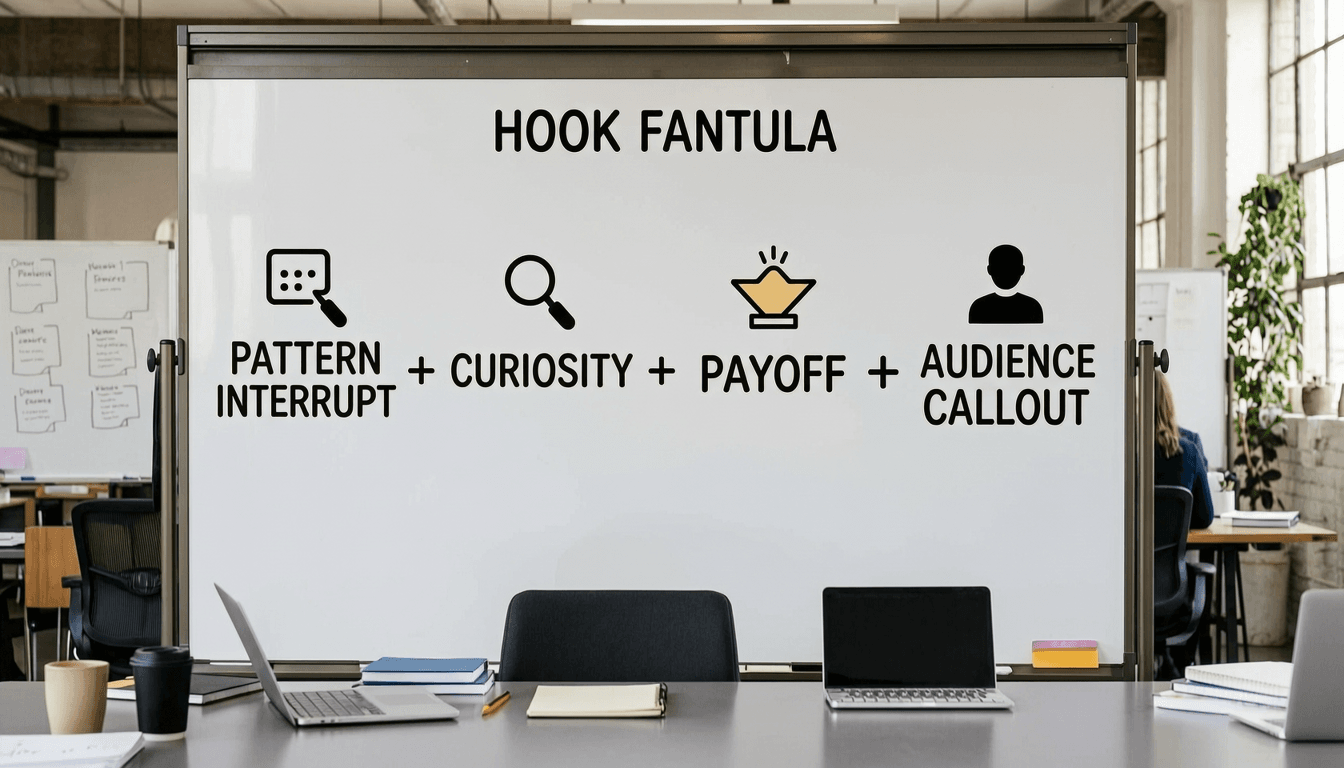
The best-performing hooks across B2B and B2C app ads follow a simple structure: Pattern Interrupt + Curiosity + Payoff + Audience Callout. You don't need all four in every hook, but the strongest ones layer at least three.
Pattern Interrupt: Start mid-action, use an unusual visual, or open with a contrarian claim. "Most people are building landing pages wrong" works better than "Here are 3 tips for landing pages." The interrupt is what stops the thumb from scrolling.
Curiosity: Create an information gap. "The reason your ads stop converting isn't your creative" immediately makes the viewer ask, "Then what is it?" Don't answer in second four — stretch the payoff across the video to keep retention high.
Payoff: Make the value explicit. "I tested 47 AI tools and only 3 were worth the money" tells the viewer exactly what they'll get if they keep watching. Vague promises ("This will change everything") don't convert as well as specific ones ("This cut my CAC by 40%").
Audience Callout: Name the viewer. "If you're running Meta ads for a B2B SaaS, stop scrolling" filters out everyone who isn't your ICP and makes your target feel personally addressed. This is especially critical for B2B, where broad hooks waste impressions on irrelevant viewers.
B2C Hook Formulas for Consumer Apps

B2C audiences on TikTok respond to emotion, identity, and transformation. The best B2C hooks for apps tap into one of three psychological triggers: aspiration ("I want that result"), relatability ("That's exactly me"), or shock ("Wait, what?").
Transformation Hook: "I lost 15 pounds in 30 days using this app." Lead with the outcome, show the before/after, then explain the method. Works for fitness, finance, productivity, and any app with a measurable result.
POV / Identity Hook: "POV: You finally found a budgeting app that doesn't feel like homework." The viewer self-identifies immediately. If they've tried and failed with other apps, they stop scrolling. This is especially strong for apps solving frustrating problems (budgeting, habit tracking, language learning).
Stat Shock Hook: "87% of people delete budgeting apps in the first week. Here's why ours is different." Specific numbers signal credibility and reframe the problem. The viewer wants to know what makes you the 13%.
Direct Challenge Hook: "If you've ever felt overwhelmed by your to-do list, stop scrolling." This works for productivity, mental health, and wellness apps. The challenge makes the viewer pause to evaluate if it applies to them — and if it does, they keep watching.
For consumer apps, the visual hook matters as much as the verbal one. Go-Viral.app recommends starting the video 2 seconds into the action, not at the beginning. If you're showing an app demo, don't start with the login screen — start with the satisfying moment (the task getting checked off, the streak hitting 30 days, the budget chart turning green).
B2B Hook Formulas for SaaS and Tools
B2B hooks on TikTok work differently than B2C. Your audience isn't looking for entertainment — they're looking for leverage. The strongest B2B hooks call out a specific, painful problem your ICP faces, then promise a specific fix.
Problem-Aware Hook: "Stop wasting your budget on LinkedIn Ads until you fix this one setting." This immediately filters the audience. Only people running LinkedIn Ads care. Everyone else scrolls. That's a feature, not a bug — you want high relevance, not high reach. Joyspace.ai calls this the "problem-aware" hook, and it's the highest-converting pattern for B2B SaaS.
Contrarian Claim Hook: "Most people are doing cold outreach wrong, and here's why." The viewer hears that they might be in the wrong group and stays to find out which group they're in. This works especially well for automation tools, sales software, and anything with a "right way" vs "wrong way" narrative.
Specific Number Hook: "I tested 47 CRM tools and only 3 were worth the money." The number signals you've done work the viewer can benefit from. The specificity (47, not "a bunch") signals credibility. This is one of the strongest patterns for comparison-driven content.
Status Reveal Hook: "I made $40K in MRR last month using this one workflow." The viewer stays to see the method. This works for tools that promise revenue outcomes (ad platforms, automation, analytics). The key is making the outcome specific and recent ("last month", not "over time").
For B2B, the verbal hook has to do more work than the visual hook. InstantPress notes that the first three seconds of speech determine whether the viewer who stopped on the visual will keep watching past second four. Never start with preamble ("In this video, I'm going to show you..."). Start with the claim.
40 Copy-Paste Hook Examples by Use Case
Here are proven hook templates you can adapt for your app or tool. These are drawn from Metadata Reactor's breakdown of 40+ formulas and ShareB.io's hook library.
For Productivity / Project Management Apps:
- "If your to-do list stresses you out more than it helps, watch this."
- "I tried 12 project management tools. Only one didn't make my team hate me."
- "POV: You finally found a task manager that doesn't feel like extra work."
For Marketing / Ad Tools:
- "Stop wasting money on Meta ads until you fix this one thing."
- "I tested 10 AI ad creators. Here's the only one that actually worked."
- "The reason your TikTok ads stop converting isn't your budget."
For Finance / Budgeting Apps:
- "If you've ever felt guilty about checking your bank account, stop scrolling."
- "87% of people quit budgeting apps in the first week. Here's why ours is different."
- "I saved $3,000 in 60 days using this one app. Here's how."
For CRM / Sales Tools:
- "Most sales teams are using their CRM wrong. Here's what actually works."
- "I closed $40K in deals last month using this one workflow."
- "If your CRM feels like a chore, you're using the wrong one."
For Design / Creative Tools:
- "Nobody talks about this Figma feature, but it cut my design time in half."
- "I tested 15 AI design tools. Only 2 were actually useful."
- "The reason your designs take so long isn't your skill."
These hooks follow the same structure: they name the audience or problem, create curiosity, and promise a specific payoff. Adapt the specifics to your product, but keep the structure intact.
How to Test Hooks Without Burning Budget
The best hook for your product is never the first one you write. The only way to find it is to test multiple angles in parallel. The problem: if you're shooting 10 different video ads, you're either spending $5K on production or you're stuck testing 2-3 variants and hoping one works.
This is where AI video tools like OneStudio solve the "testing trap." Instead of filming 10 hooks, you generate 10 variants from one script or product link. Change the hook, keep the rest identical, and let the data tell you which pattern your audience responds to. You can test curiosity hooks against transformation hooks, B2B problem-aware hooks against stat shock hooks, all for the cost of one traditional shoot.
The testing process: start with 5-7 hook variants, same product, same CTA, different first three seconds. Run them as TikTok ads with $10-20 budgets each. The hook with the highest 3-second retention and lowest CPM wins. Kill the losers after 48 hours, scale the winner, then test new hooks against it. This is how top DTC brands and SaaS tools find their winning creative — not by guessing, but by letting the platform tell them what works.
For more on scaling this approach, check out our pricing page to see how batch variant generation works, or compare OneStudio to other AI ad tools at /alternative/arcads and /alternative/creatify.
The Hook Is the Ad
Most advertisers spend 80% of their creative energy on the middle and end of the ad. The product demo, the testimonial, the CTA. But if the first three seconds fail, none of that matters. The hook isn't the intro — it's the entire reason the ad works or doesn't.
For app creators and SaaS founders running TikTok ads in 2026, the hook is the highest-leverage element in the creative. Test it aggressively, iterate fast, and don't assume the first one will work. The platforms that win on TikTok aren't the ones with the best product — they're the ones that stop the scroll in three seconds and earn the next 27.
If you're stuck in the testing trap (need 10 hook variants, can only afford 2), OneStudio solves that. Generate batch ad variants, test multiple hooks in parallel, and scale what works — all from a single product link. Start testing hooks that actually stop the scroll.